
Generation and storage sides,
one safety foundation
PV incidents come in exactly two forms: DC high voltage on the roof, and thermal runaway in the storage cabinet. Our two product lines address each, sharing LDSW standard-based communication, in-house SOC silicon and TinyML edge intelligence — so one customer gets one supplier, one interface and one safety ledger.
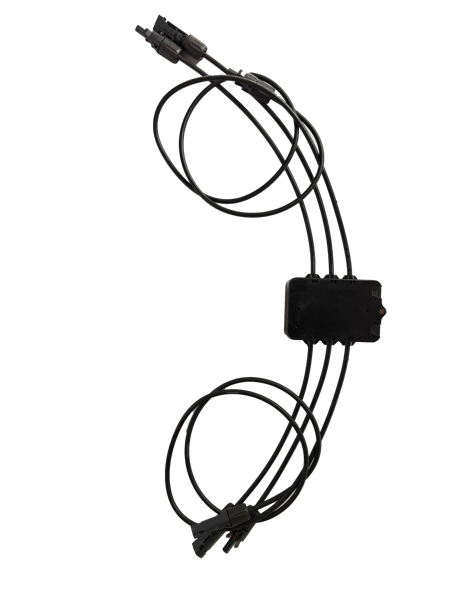
Safety is not a point — it is a chain from generation to storage
Shutdown on the roof alone still leaves the storage cabinet flammable; suppression in the cabinet alone still leaves the roof live. A real closed loop addresses both ends.
HiSRSD · generation side
- Protected against: DC shock hazard and string arcing, up to nearly 1,000 V
- Core action: module-level shutdown within 25 s, array-external voltage ≤1 V
- Triggers: power loss / command / fire interlock / edge AI diagnosis
- Delivered as: device + gateway + cloud platform, wireless and cabling-free
- Product details →
CS-500 · storage side
- Protected against: lithium thermal runaway, flammable gas and in-cabinet deflagration
- Core action: oxygen displacement + cryogenic cooling + suppression at onset
- Triggers: combined temperature / smoke / characteristic-gas detection, two-parameter confirmation
- Delivered as: storage + pressurisation + detection + spraying, skid-mounted
- Product details →
Four project types, four different paths to deployment
Module-level shutdown means different things by segment: C&I cares about network scale and retrofit speed, public buildings about acceptance and fire interlock, residential about standardised delivery, overseas about standards alignment and no-outage installation.
C&I distributed PV
Large roof areas, dense strings, frequent servicing. The concerns are node scale, retrofit duration and O&M efficiency.
View solution →Public buildings & rail
Schools, hospitals, metro depots. The concerns are fire acceptance criteria, emergency interlock and an auditable safety ledger.
View solution →Residential PV
Small per-site capacity, many install points, long service radius. The concerns are installation speed, controllable cost and remote visibility.
View solution →Overseas retrofit
Operating plants that cannot afford a long outage. The concerns are cabling-free, no-outage installation and local standards alignment.
View solution →The numbers are not ours to claim — they were issued by a third party
| Metric | Result | Basis |
|---|---|---|
| Communication success rate | ≥ 99.2% | 20-unit pilot at a metro depot, East China; third-party acceptance |
| Voltage measurement error | ≤ ±0.2 V | Same pilot, three months of continuous operation |
| Temperature measurement error | ≤ ±0.5°C | Same pilot, three months of continuous operation |
| Continuous-operation data volume | 500,000+ records | Three-month cumulative; data completeness does not vary with weather |
Site characteristics: strong electromagnetic interference from traction return currents, rapid deployment required on existing canopy structures, continuous runs along the building facade. The site has been in continuous operation for over 12 months.
Give us your project conditions — we'll write a design, not a brochure
Roof area, installed capacity, inverter model, whether the plant is already operating, and your acceptance requirements. With those we produce a network design, node count calculation and payback estimate.